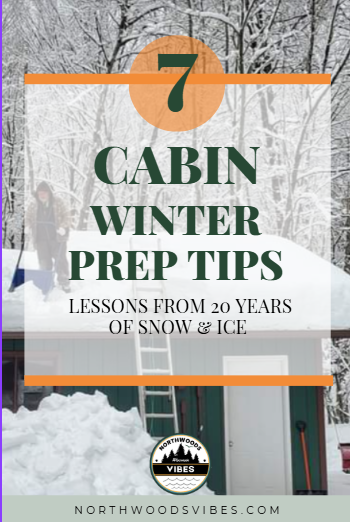
Whether you’re closing your cabin for six months or just skipping a few cold weeks, winter prep isn’t something to take lightly. Around here, the difference between a smooth spring opening and a disaster can come down to whether you shut off a valve—or moved a chair.
Here’s what two decades of freezing temps, heavy snow, and the occasional mouse invasion have taught me about getting a cabin ready for winter.
1. Shut Down (or Protect) Your Water System
If you have a well, turn off the water at the source. If not, at least shut off the main line where it enters the house and drain all pipes. Open faucets and flush toilets to clear the lines. Pour about 1 cup of antifreeze into each drain—sinks, showers, floor drains.
If your plumbing runs near exterior walls or crawl spaces, you may want to insulate your pipes. I’ve used everything from foam sleeves and pipe warmers inside to rigid board insulation along outside pipe pathways. Pray for snow—it’s a natural insulator. A little effort here beats replacing a burst pipe come April.
Check out these Foam pipe insulation sleeves for hot & cold water pipes offered on Amazon — they do a good job of protecting plumbing near exterior walls/crawl spaces.
2. Set (Don’t Shut Off) the Heat
Never turn your heat off completely—it’s risky for pipes and hard on your cabin’s structure. I keep mine set around 55°F. If your cabin has Wi-Fi, a smart thermostat makes remote checks easy.
If you’re on propane, top off your tank before winter. Deliveries can be tricky once the snow piles up, and usage spikes in deep cold. For those who use their cabin all winter, consider bulk pre-purchase programs offered by most propane providers in September or October—it often comes at a discount and covers your entire season.
If I could only recommend one gadget, it’s a Wi‑Fi smart thermostat. Pipes stay safe, the cabin stays cozy at ~55 °F, and you can start warming it up from miles away. There are many out there, but I recommend the Google Nest based on the ease of my own installation and reliability.
3. Handle the Driveway and Snow Management
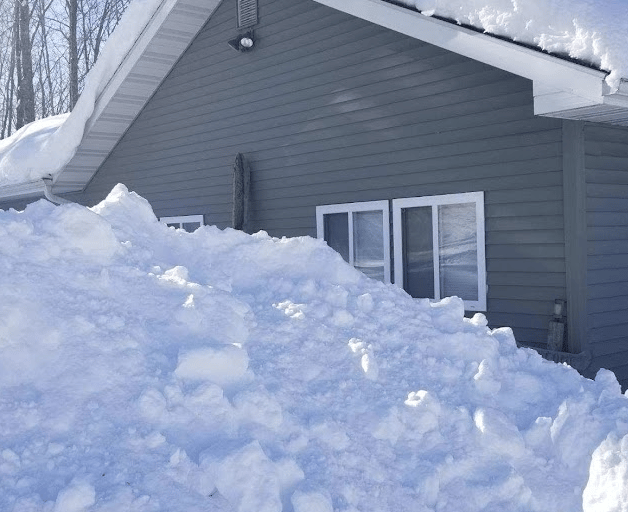
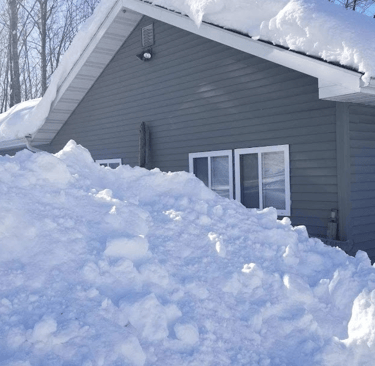
If you have a plow service, make their life easy. Mark your septic area, rock borders, and anything you don’t want buried or hit. Temporary snow fencing can also prevent drifting snow from blocking your path or piling against your cabin.
Keep your shovel, snowblower, and sand or eco-friendly deicer (avoid salt—it’s tough on lakes and pets) ready before the first storm. A heated mat, like this Heated Outdoor Snow-Melting Mat for Walkways and Entryways, is a small luxury that melts ice before it becomes a hazard — a real lifesaver at the front door.
4. Outwit the Mice
Every seasoned cabin owner has a mouse story. Start by removing all food, even sealed or canned goods. Decon or traps can help, but prevention is key—seal any gaps where utilities enter the cabin. My favorite deterrent? Mouse Mix, which has proven very successful in my garage. It's all natural and it's a friendly family-run business from Hudson, WI. Wisconsin business for the win!
I keep my fridge running through winter—it’s surprisingly efficient and doubles as safe, critter-proof storage for dry goods, oils, or condiments. Just remember to turn off the ice maker.
5. Clear the Danger Zone Outside
Start by putting a shovel outside your front door and anywhere you’ll need it—like near a shed for a clear path from car to door.
You may want to consider installing a Weatherproof outdoor motion‑sensor lights & camera kit — ensures visibility and safety through long winter nights. These outdoor motion-sensor lights and camera kits ensure safety and visibility all winter — plus you can sneak a peek at the wildlife or see how much snow fell. If you already have outdoor cameras, charge them now. Nothing’s worse than trying to adjust them in bitter cold.
While you're at it - check that all outdoor lights work—they’ll get heavy use once it’s dark by 4 p.m.
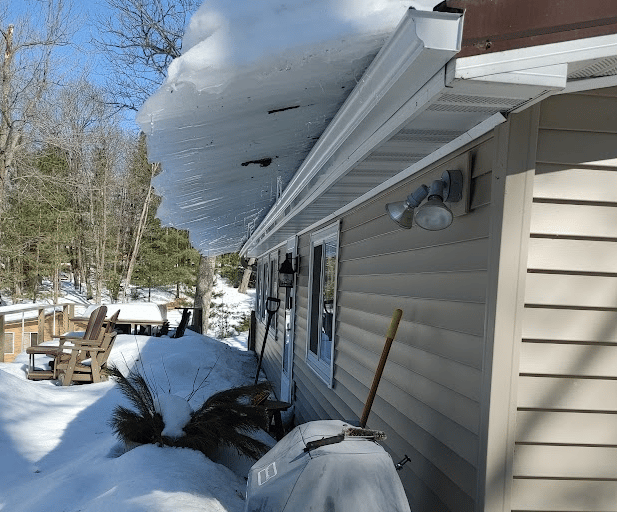
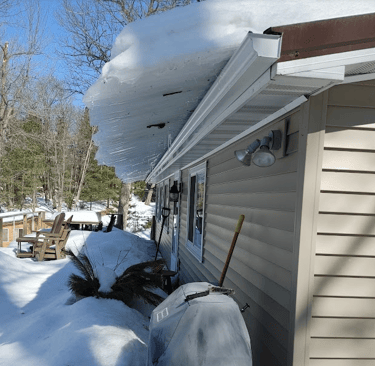
Metal roofs are great—until the snow and ice slide off at once. Move or cover anything under the eaves: grills, chairs, flower boxes, or wood piles. I’ve learned this the hard way: one winter, ice blocked my entry door, and I actually had to call a service to thaw the roof while I was stuck inside.
6. Protect What’s Inside
If you won’t be back for months, cover furniture and mattresses with old sheets to protect against dust or moisture. Store linens and clothes in sealed bins. Unplug electronics and small appliances.
Depending on your cabin, you may want to close interior doors. On one hand, it hinders airflow, which isn’t ideal—but I’ve returned to cabins with doors that wouldn’t close after foundation shifts in deep freeze. Same goes for shower doors!
7. Winterize Your Car Too
If you travel up north in winter, keep your car stocked like your cabin: blanket, shovel, jumper cables, flashlight, extra gloves, and snacks. Add a small bag of sand or cat litter for traction—it’s one of those things you only forget once.
Tip from my friend Deb K: a small rug or mat under your tires can help you get unstuck on icy spots with ease. Trust me—it works.
Final Thought
Winter in the Northwoods is beautiful—but unforgiving. Whether your cabin hibernates all season or you sneak up for long weekends, a few smart moves now mean you can arrive to peace, pine-scented air, and a cabin that’s ready to welcome you—not frozen pipes and regret.