Barn Quilts with a Northwoods Vibe
Barn quilts are bold geometric designs inspired by traditional quilt patterns and painted on durable panels for indoor and outdoor display. My Northwoods barn quilts reinterpret classic patterns through the lens of place, drawing inspiration from landscape, memory, and Northwoods living.
EXPLORECABINENTERTAIN
2/8/20266 min read
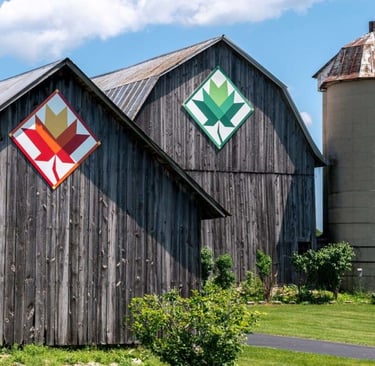
Barn Quilts with a Northwoods Vibe
I didn’t set out to make barn quilts.
I came to them slowly — through people, places, and memory.
Long before I ever picked up a brush, quilts were already part of my life.
My grandmother, and the quilts that filled everything
My grandma was a quilter. She specialized in classic star patterns and made beautiful runners, full quilts, wall hangings, and art pieces for every child and grandchild. They were everywhere — thoughtful, generous, and made to be used and lived with.
I admired her deeply, but I never inherited her talent. Sewing wasn’t my language. Precision wasn’t my strength. But the designs stayed with me — especially the simple, classic patterns, and the mismatched ones that somehow just worked.
To this day, when I see a quilt block that shouldn’t quite make sense but does, I think of her.
Where painted barn quilts come from
Barn quilts as we know them today are a relatively recent tradition.
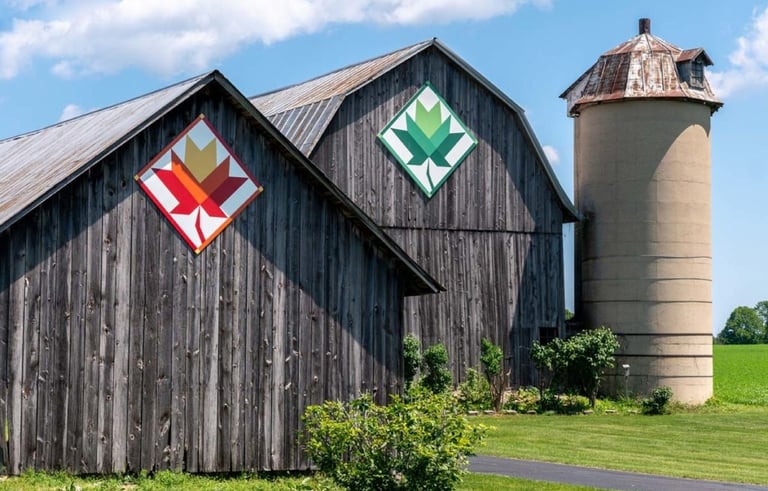
They began in the early 2000s as a way to honor rural heritage, celebrate quilting patterns, and bring color and identity to working landscapes. Families chose designs that reflected history, values, or simply what felt right for the place.
Painted on panels instead of stitched from fabric, barn quilts made it possible to take the language of quilting outdoors — bold enough to be seen from the road, durable enough to live through weather, and graphic enough to stand on their own.
If you’ve ever driven past one, you know the feeling: a flash of color, a moment of curiosity, and then the quiet satisfaction of recognition.
Popular patterns with limitless design
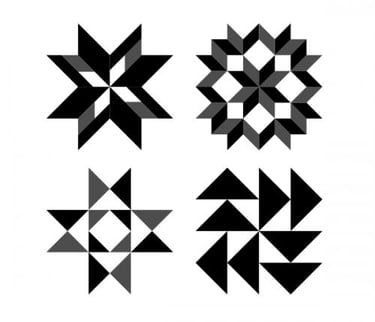
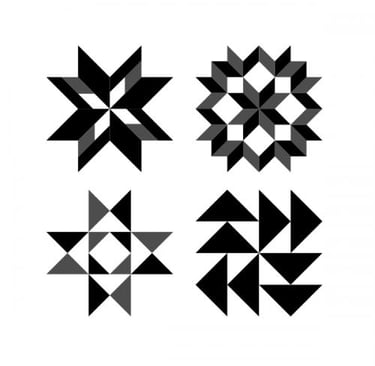
Many barn quilt designs are based on traditional quilt blocks that have been passed down for generations. While the meanings weren’t always formal or universal, certain patterns became widely recognized and reused because they were visually strong and easy to adapt.
Some of the most common include:
Star patterns — often associated with guidance, hope, or marking a place of importance
Ohio Star — one of the oldest and most recognizable American quilt blocks
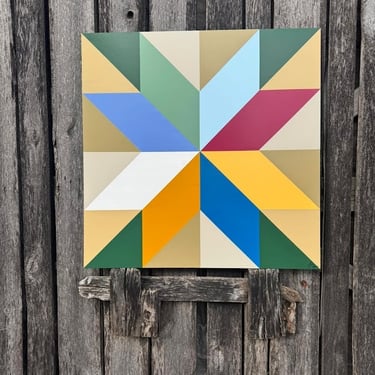
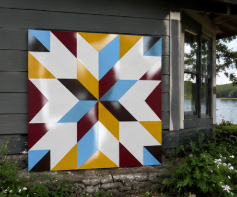
Lone Star or Diamond Star — prized for bold geometry and symmetry
Log Cabin — symbolizing home, hearth, and stability
Flying Geese — movement, migration, and travel
What’s interesting is that these patterns were never fixed rules. Quilters mixed colors, flipped blocks, and improvised based on what they had. That freedom is part of why even mismatched or imperfect designs can feel so right.
Barn quilts carried those same patterns outdoors — enlarging them, simplifying them, and letting color and contrast do the storytelling instead of stitches.
That’s the tradition I’m drawn to: recognizable forms, interpreted in personal ways.
My journey “up north” past barns
When I drive “up north” from my home in Port Washington, Wisconsin, I have two east–west highway options: Highway 10 or Highway 29. I always choose Highway 29.
That route takes me past no fewer than twenty-five barn quilts. Some are classic stars. Others are more personal. All of them feel intentional — like small acts of public art scattered across the countryside.
I started really looking at them. Wondering about the colors. The choices. The people who decided, “Yes — this belongs here.”
That’s when my interest turned into something more. I was hooked.
First painted quilt - a family experiment
My first Thanksgiving at the cabin, we decided to make barn quilts the family activity after dinner.
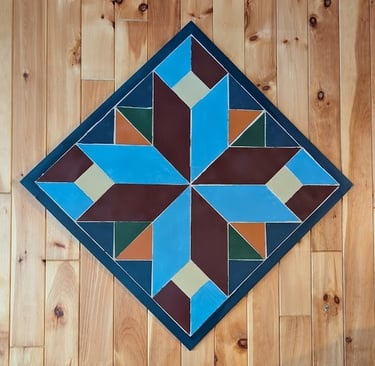
I am not a quilter, nor am I particularly precise with crafting, so I ordered a pre-drawn pattern on a plywood board. I bought the paint, laid out the colors, and got approval from my very artistic, very talented quilter sister.
Then everyone took a square. Or two. Or many.
People painted. Laughed. Made mistakes. Fixed them. Left brush marks. Added personality.
That barn quilt has been hanging on the wall ever since.
I love that it brings a pop of color in my intense knotty pine cabin (if you know, you know). But more than that, I love what it represents: a moment in time, shared effort, and the kind of imperfect collaboration that only happens when you’re together and not trying too hard.
It’s custom art. And it’s a family memory.
More than barns
Despite the name, barn quilts aren’t just for barns.
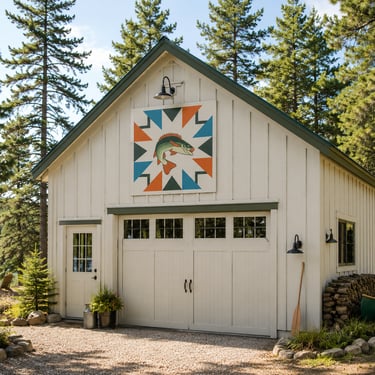
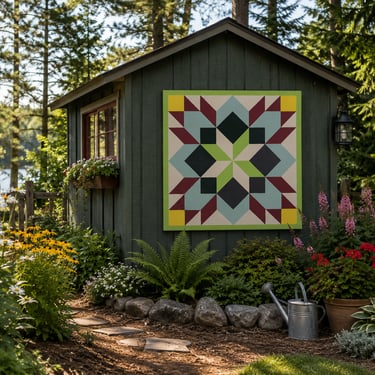
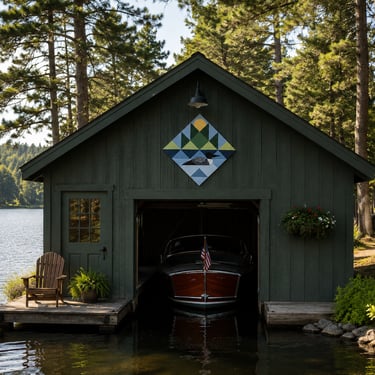
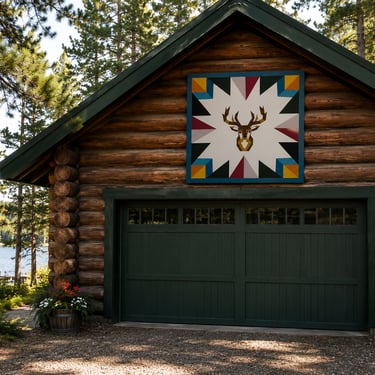
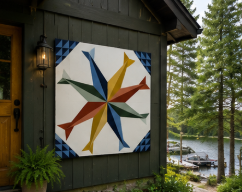
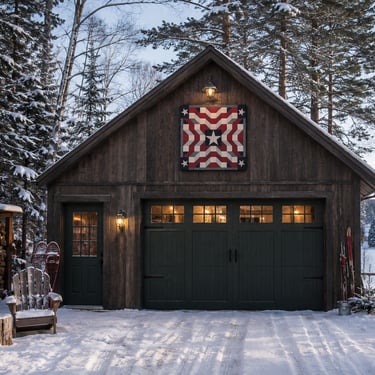
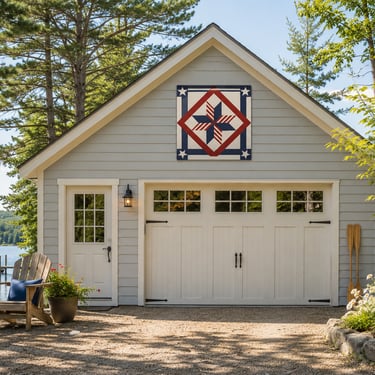
They’ve become a form of garden and yard art as well — displayed on fences, garages, sheds, porches, and cabin walls. Not everyone has a barn, but many people have a place that deserves a bit of color and meaning.
Barn quilts work especially well outdoors because they’re meant to be seen from a distance. They hold their own against trees, snowbanks, and open sky. They mark a space without overpowering it.
Why barn quilts live here now
When you put all of this together — my grandmother’s quilts, the Highway 29 barns, that Thanksgiving afternoon — it makes sense that barn quilts would eventually find their way here.
They sit at the intersection of tradition and place, pattern and memory. They’re bold without being loud. Rooted without being precious.
They feel right at home in the Northwoods.
How I make them today
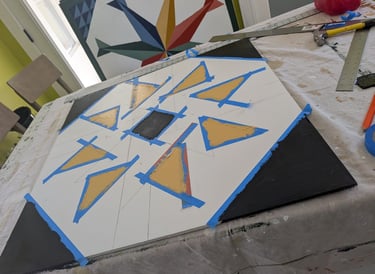
The barn quilts I make today begin the same way every time: with a pattern and a lot of patience.
I’m drawn to strong geometry — stars, diamonds, and classic quilt blocks with clean lines and bold contrast. Each piece is hand-painted on a durable panel selected for stability and long-term outdoor use, especially in Northwoods weather.
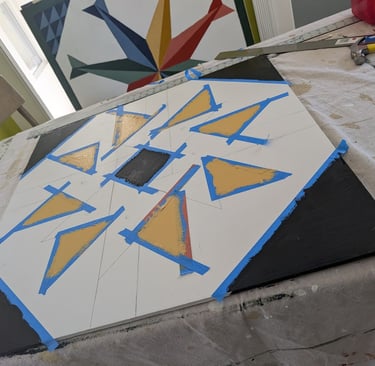
The process is intentionally slow: measure, tape, paint, wait, adjust, repeat.
There’s no mass production here. Every barn quilt is made one at a time, with close attention to line, color, and balance.
It started with one for my own home. Then one for the cabin. Then a handful for friends. And now, little by little, I make them for others who feel drawn to this kind of work too.
My barn quilts have the Northwoods vibe
Not all barn quilts feel the same, and that’s intentional.
Many traditional barn quilts reflect the landscapes they come from — farmland, livestock, and agricultural life. But the places that shape me look different. The Northwoods isn’t about corn or cattle. It’s about trees, water, sky, and the quiet geometry of nature itself.
That’s why I focus on Northwoods barn quilts.
My designs are inspired by the rhythms of Northwoods living — lakes and shorelines, forests and trails, long views of sky, and the way people here mark place more subtly. I work within a core palette of five colors that return again and again, drawn from sky, water, and forest tones. Limiting the palette keeps the designs cohesive and lets pattern, balance, and contrast do the work.
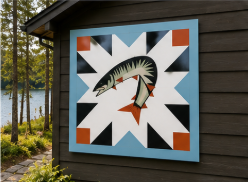
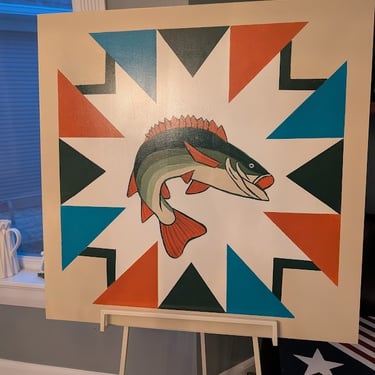
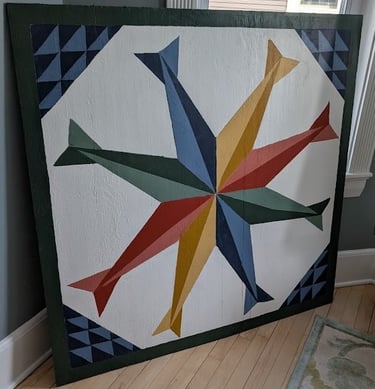
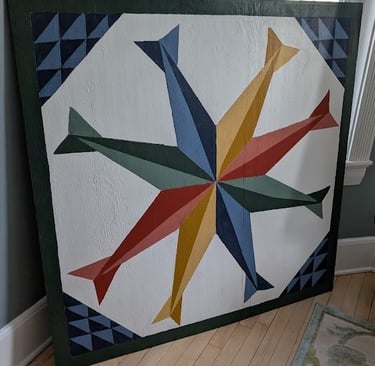
I specialize in custom patterns built from classic quilt structures — stars, targets, circles, and diamonds — then reinterpret them through a Northwoods lens. Pieces like Hunter Target, Loon Cruise, and Circle of Fishes start with familiar forms and evolve into something place-specific and personal.
The goal isn’t novelty. It’s resonance.
I want each barn quilt to feel like it belongs where it hangs — whether that’s on a cabin wall, a shed, a garden fence, or a quiet stretch of yard surrounded by trees.
Just the beginning
This is the beginning.
I’m making barn quilts because I love the process and the history behind it. Over time, I’ll share finished pieces, experiments, and occasionally custom projects when the fit is right.
What is a barn quilt?
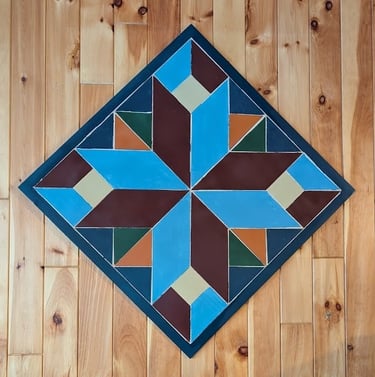
A barn quilt is a large-scale geometric design inspired by traditional quilt blocks and painted on a rigid panel for display outdoors or indoors. Originally created to celebrate quilting heritage and rural identity, barn quilts are commonly displayed on barns, cabins, sheds, fences, and garden walls. Their bold patterns and strong contrast allow them to stand out against natural landscapes while reflecting personal stories, place, and tradition.
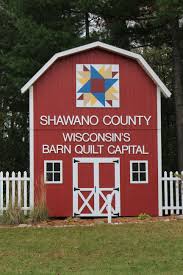
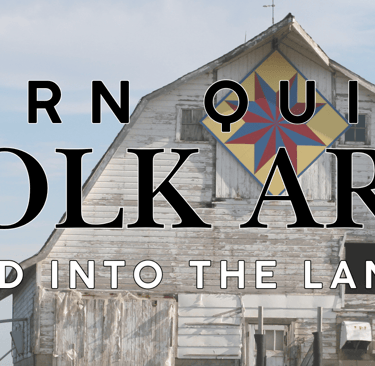
“If you’ve ever driven past one, you know the feeling: a flash of color, a moment of curiosity, and then recognition.”
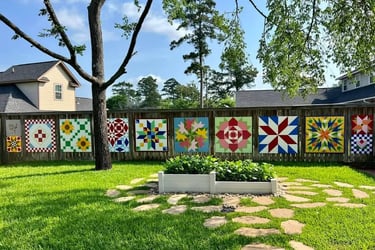
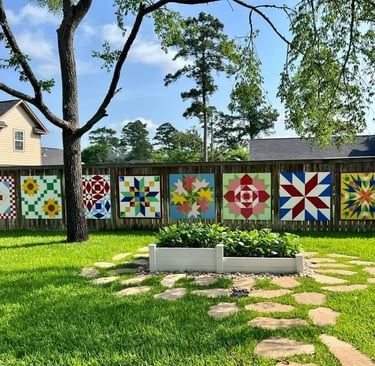
Renee' Martin decorated her privacy fence with barn quilts that she painted herself. https://www.facebook.com/.../a.26420689.../1123075915217141/
Custom Barn Quilts
Made for cabins, lake homes & memories.